
Menu
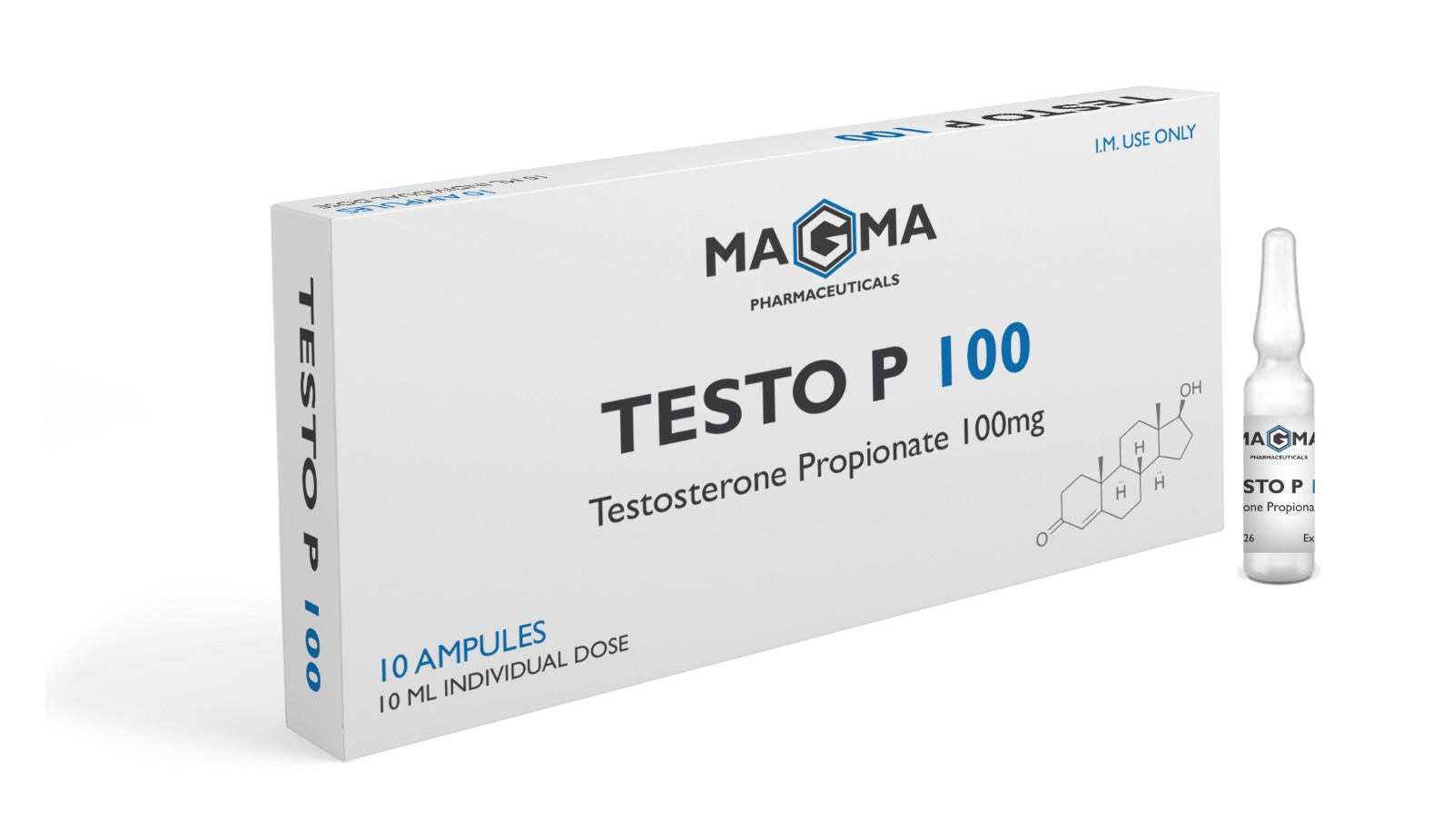
Verify if your TESTO P 100 is genuine.
Description:
Testosterone propionate is a commonly manufactured injectable form of the primary male androgen testosterone. The added propionate ester will slow the rate in which testosterone is released from the injection site, but only for a few days. Testosterone propionate is, therefore, comparatively much faster-acting than other testosterone esters such as cypionate or enanthate, and requires a much more frequent dosing schedule. By most accounts testosterone propionate is an older and cruder form of injectable testosterone, made obsolete by the slower-acting and more comfortable esters that were developed subsequent to it. Still, those who are not bothered by the frequent injection schedule find testosterone propionate every bit as acceptable. As an injectable testosterone, it is a powerful mass-building drug, capable of producing rapid gains in both muscle size and strength.
Administration (Men):
To treat androgen insufficiency, early prescribing guidelines recommended a dosage of 25 mg given two to three times per week. Modern product literature usually recommends 25 mg to 50 mg given two to three times per week for the same purpose. The usual dosage among male athletes is in the range of 50-100 mg per injection, which is given every second or third day. Similar to other esters of testosterone, testosterone propionate is commonly used at a weekly cumulative dosage between 200 mg to 400 mg. This level is sufficient for most users to notice
exceptional gains in muscle size and strength.
Testosterone propionate is usually incorporated into bulking phases of training, when added water retention will be of little consequence, the user more concerned with raw mass than definition. Some do incorporate this drug into cutting cycles as well, but typically in lower doses (100-200 mg per week) and/or when accompanied by an aromatase inhibitor to keep estrogen levels under control. Testosterone propionate is a very effective anabolic drug, and is often used alone with great benefit. Some, however, find a need to stack it with other anabolic/androgenic steroids for a stronger effect, in which case an additional 200-400 mg per week of boldenone undecylenate, methenolone enanthate, or nandrolone decanoate should provide substantial results with no significant hepatotoxicity. Testosterone is ultimately very versatile, and can be combined with many other anabolic/androgenic steroids to tailor the desired effect.
Administration (Women):
Testosterone propionate is rarely used with women in clinical medicine. When applied, it is most often used as a secondary medication during inoperable breast cancer, when other therapies have failed to produce a desirable effect and suppression of ovarian function is necessary. Testosterone propionate is not recommended for women for performance-enhancing purposes due to its strong androgenic nature and tendency to produce virilizing side effects. Female bodybuilders who insist on using testosterone, however, often choose propionate, as blood levels are easier to control with this ester compared to cypionate or enanthate. Should virilization symptoms develop, hormone levels will decline in a matter of days, instead of weeks, following drug cessation. The administration schedule is often more conservative as well, with a small injection (25 mg at most) given every 5 to 7 days, and cycle duration limited to 6-8 weeks or less.
Side Effects (Hepatotoxicity):
Testosterone does not have hepatotoxic effects; liver toxicity is unlikely. One study examined the potential for hepatotoxicity with high doses of testosterone by administering 400 mg of the hormone per day (2,800 mg per week) to a group of male subjects. The steroid was taken orally so that higher peak concentrations would be reached in hepatic tissues compared to intramuscular injections. The hormone was given daily for 20 days, and produced no significant changes in liver enzyme values including serum albumin, bilirubin, alanine-amino-transferase, and alkaline phosphatases.
Side Effects (Cardiovascular):
Anabolic/androgenic steroids can have deleterious effects on serum cholesterol. This includes a tendency to reduce HDL (good) cholesterol values and increase LDL (bad) cholesterol values, which may shift the HDL to LDL balance in a direction that favors greater risk of arteriosclerosis. The relative impact of an “anabolic/androgenic steroid on serum lipids is dependant on the dose, route of administration (oral vs. injectable), type of steroid (aromatizable or non-aromatizable), and level of resistance to hepatic metabolism. Anabolic/androgenic steroids may also adversely affect blood pressure and triglycerides, reduce endothelial relaxation, and support left ventricular hypertrophy, all potentially increasing the risk of cardiovascular disease and myocardial infarction.
KEEP OUT OF REACH OF CHILDREN
Should BE AT ROOM TEMPERATURE 15-30•c (59-86•F)
PROTECT FROM SUNLIGHT
MANUFACTURED AND DISTRIBUTED BY:
MAGMA pharmaceuticals.Ltd
MAGMA Pharmaceuticas®️ adheres to strict international safety and legal guidelines.