Menu
Verify if your ANDARINE is genuine.
WHAT IS S-4 (ANDARINE) | GTX-007 EXPLAINED
INTRODUCTION TO S-4 (ANDARINE)
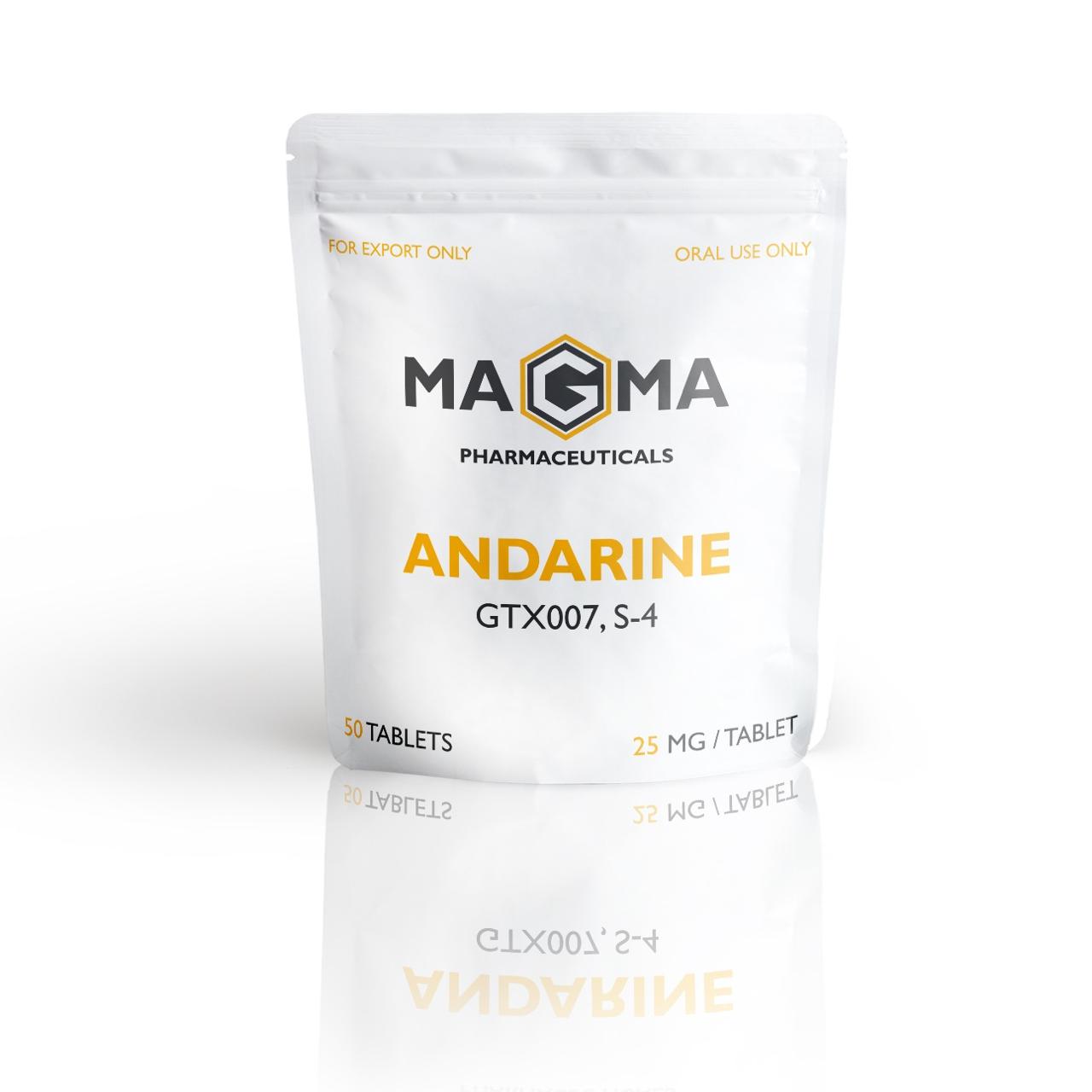
S-4, also known as Andarine or GTX-007, is an orally bioavailable, non-steroidal selective androgen receptor modulator (SARM). Originally developed by GTX Inc., Andarine is a partial agonist of the androgen receptor (AR), designed to selectively stimulate anabolic activity in muscle and bone tissues without the undesirable side effects of traditional anabolic steroids.
SARMs like S-4 were developed in the early 2000s as alternatives to steroidal androgen receptor agonists such as testosterone and dihydrotestosterone (DHT), which are associated with liver toxicity, cardiovascular risks, and prostate enlargement Dalton et al., Current Opinion in Clinical Nutrition & Metabolic Care, 2007.
WHY WAS S-4 ABANDONED IN CLINICAL TRIALS?
Although S-4 showed promising anabolic activity in preclinical studies, it never advanced to Phase I human trials due to visual side effects. These effects were linked to the binding of S-4 to ocular androgen receptors, resulting in temporary vision disturbances such as night blindness and a yellow tint. The severity and frequency of these effects led researchers to discontinue clinical development of S-4 despite its efficacy in muscle and bone tissue Kearbey et al., Endocrinology, 2007.
HOW DOES S-4 (ANDARINE) WORK?
MECHANISM OF ACTION
S-4 works primarily by binding selectively to androgen receptors in skeletal muscle and bone, mimicking the effects of testosterone but with reduced activity in androgen-sensitive tissues like the prostate. Unlike DHT, which is a full androgen receptor agonist across all tissues, S-4 acts as a full agonist in muscle but only a partial agonist in the prostate Kearbey et al., Endocrinology, 2007.
Additionally, S-4 may inhibit DHT binding, which can reduce side effects related to excess androgenic activity.
HORMONAL SUPPRESSION
Although S-4 does not aromatize into estrogen, it suppresses natural testosterone production by reducing levels of luteinizing hormone (LH) and follicle-stimulating hormone (FSH). As a result, post-cycle therapy (PCT) is recommended after S-4 use to help restore hormonal balance.
BENEFITS OF S-4 (ANDARINE)
INCREASES LEAN MUSCLE MASS
S-4 has demonstrated significant anabolic activity in skeletal muscle. One of the earliest pivotal studies was conducted in orchidectomized (castrated) male rats, where S-4 restored muscle mass and strength to levels seen in intact animals.
Dosage: 3 or 10 mg/kg of S-4 for 8 weeks
Results: Restoration of soleus muscle mass, levator ani muscle, and improved strength
Comparison: Similar anabolic effect to DHT, but with much less stimulation of androgenic organs like the prostate and seminal vesicles
While DHT increased prostate size by nearly 200%, S-4 caused only 16–17% growth, indicating a much more tissue-selective anabolic profile Kearbey et al., Endocrinology, 2007.
ENHANCES BONE MINERAL DENSITY
In the same animal studies, S-4 significantly improved total body bone mineral density (BMD), offering protective effects against age-related bone loss.
S-4’s Role: Direct activation of androgen receptors in bone tissue
Key Difference: Unlike testosterone, S-4 does not aromatize into estrogen, and its bone effects are independent of estrogen receptor activity
Comparison: S-4 outperformed DHT in bone mineral density improvements without affecting estrogen levels
These findings suggest S-4 could be a promising candidate for osteoporosis prevention, especially in populations where estrogen therapy is contraindicated Kearbey et al., Endocrinology, 2007.
LIMITATIONS AND FINAL CONSIDERATIONS
WHY S-4 ISN’T USED IN HORMONE REPLACEMENT THERAPY
Despite its muscle-building properties, S-4 is not viable for hormone replacement therapy (HRT) because it:
Does not convert to estrogen, which plays a vital role in male and female health
Causes testosterone suppression, requiring post-cycle intervention
Has vision-related side effects that raise long-term safety concerns
CURRENT STATUS AND RESEARCH DIRECTION
While S-4 is not FDA-approved, it remains popular in research and underground bodybuilding communities. More clinical research is required to:
Develop derivatives of S-4 that avoid visual side effects
Confirm long-term safety in human populations
Evaluate its therapeutic potential in sarcopenia, osteoporosis, and muscle-wasting diseases
⚠️ Disclaimer: S-4 (Andarine) is currently classified as a research chemical and is not approved for human use outside of clinical studies.
S-4 (ANDARINE) SIDE EFFECTS, LEGALITY, AND SAFETY PROFILE
KNOWN AND REPORTED SIDE EFFECTS OF S-4 (ANDARINE)
Like other commonly used selective androgen receptor modulators (SARMs), S-4 (Andarine) is associated with several potential side effects. Due to the lack of long-term human efficacy and toxicity studies, the full extent of health risks remains largely unknown.
Although preclinical animal trials did not report many adverse effects, as S-4 was never tested in human clinical trials, one of the most prominent and unique side effects reported from user experiences is vision impairment.
VISION IMPAIRMENT: A UNIQUE RISK OF ANDARINE
S-4 demonstrates high binding affinity for androgen receptors located in the eye—specifically in the cornea, lens, iris, and ciliary body. These ocular structures contain androgen receptors, and SARMs like S-4 can bind to these receptors, causing disruption in visual function Dubois et al., The Ocular Surface, 2020.
At higher doses, users commonly report:
Blurred or yellow-tinted vision
Night blindness
Visual flashes or flickering
These effects are typically temporary and dose-dependent, but due to their prevalence, they were a major reason S-4 was discontinued from clinical development.
HORMONAL SUPPRESSION AND METABOLIC EFFECTS
Like all SARMs, S-4 suppresses natural testosterone production—even though it is considered among the least suppressive of the mainstream SARMs.
COMMON HORMONAL AND ANDROGENIC SIDE EFFECTS INCLUDE:
Acne
Low libido
Lethargy
Gynecomastia (male breast tissue growth)
Depressed mood
Elevated blood pressure
Shrinkage in testicular size
In addition, S-4 does not aromatize into estrogen, yet it can still indirectly cause imbalances in estrogen levels. The imbalance between suppressed testosterone and fluctuating estrogen may further increase the risk of the above symptoms.
Studies also report reductions in sex hormone-binding globulin (SHBG) and high-density lipoprotein (HDL), the so-called “good cholesterol”, which raises concerns about cardiovascular health Narayanan et al., JAMA, 2018.
ADDITIONAL COMMONLY REPORTED SIDE EFFECTS OF SARMS IN GENERAL:
Headaches
Dry mouth
Constipation
Nausea
Dyspepsia (indigestion)
Upper respiratory tract infections (URIs)
LIVER TOXICITY CONCERNS
Though SARMs are marketed as having a lower liver toxicity risk compared to anabolic steroids, there is still potential for hepatic stress. Some users may experience elevated liver enzyme levels—a common marker for liver strain or injury.
⚠️ At higher “ergogenic” or bodybuilding doses, SARMs like S-4 may still carry hepatotoxic risks, even though therapeutic doses may present a lower risk profile FDA SARMs Advisory, 2017.
PHARMACOKINETICS AND HALF-LIFE OF S-4
ABSORPTION AND BIOAVAILABILITY
The average terminal half-life of S-4 in animals is about 4 hours. After oral dosing, it is:
Rapidly absorbed
Highly bioavailable
Peak plasma levels occur within 48–84 minutes Kearbey et al., Endocrinology, 2007
This relatively short half-life requires more frequent dosing to maintain stable blood concentrations and heightens the need for proper post-cycle therapy (PCT).
IMPORTANCE OF POST-CYCLE THERAPY (PCT)
Due to testosterone suppression and potential hormonal imbalances, PCT should begin immediately after concluding S-4 use to help restore normal endocrine function and prevent long-term side effects such as low testosterone syndrome.
KEEP OUT OF REACH OF CHILDREN
Should BE AT ROOM TEMPERATURE 15-30•c (59-86•F)
PROTECT FROM SUNLIGHT
MANUFACTURED AND DISTRIBUTED BY:
MAGMA pharmaceuticals.Ltd
MAGMA Pharmaceuticas®️ adheres to strict international safety and legal guidelines.